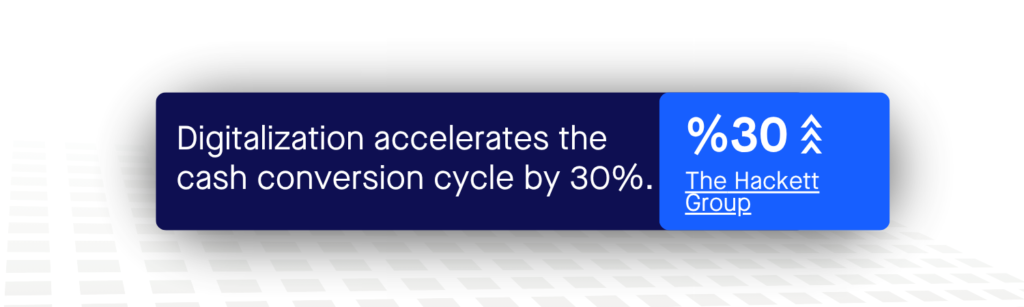
Discover how dynamic discounting, SCF platforms, and modern treasury approaches are turning working capital management into a strategic advantage.
For many years, working capital management was treated as a technical area handled mainly within finance departments. Collections, payment terms, and credit limits operated within relatively stable frameworks, and cash planning followed predictable patterns.
In recent years, that structure has started to shift.
Supply chains have become longer and more vulnerable. Operational speed expectations have increased. The movement of cash across organisations carries greater operational weight than before. For many companies, growth creates a second challenge: maintaining liquidity at the same pace.
Treasury teams are now expected to oversee both financial flows and operational timing. Working capital management increasingly affects production continuity, supplier relationships, and operational stability.
At one time, a strong balance sheet was defined by accessible credit lines, controlled debt levels, and stable collections performance. Financing instruments were more predictable, and cash planning was relatively straightforward.
Today, the environment is far more dynamic.
As a result, the key issue for many companies is no longer how much financing they can access, but how quickly, flexibly, and sustainably they can manage that financing.
In recent years especially, working capital management has evolved from a technical monitoring function within finance departments into a strategic priority tied directly to overall corporate resilience.
“According to PwC’s Global Treasury Survey, cash and liquidity management continue to rank among companies’ top priorities, while closer integration between treasury teams and operational processes is becoming increasingly important.”
This shift is pushing companies to take a more holistic approach to financing.
Today, a strong working capital structure is measured not simply by preserving cash, but by the ability to direct liquidity to the right place at the right time.
For years, businesses attempted to manage financing needs through a single structure. In today’s trading environment, however, that approach is becoming increasingly inadequate. Not every supplier operates with the same cash cycle, operational structure, or financing requirements.
In some periods, accelerating collections becomes critical.
In others, extending payment terms creates greater value from a working capital perspective. Rising interest-rate volatility, global supply-chain pressures, and operational uncertainty are all driving companies toward more flexible financing models.
As a result, modern treasury teams are no longer managing just one financing product. Instead, they are building financing ecosystems tailored to different operational needs.
Today, companies may combine several structures simultaneously, including:
Each model addresses a different liquidity requirement. The real challenge is not identifying the “best” financing product, but determining which structure works most efficiently for which supplier group and under which conditions.
Success in modern treasury management is no longer about scaling a single financing solution. It’s about balancing multiple financing tools within the same ecosystem.
Thanks to advances in digital platforms, companies can now manage these models within a unified structure rather than through disconnected processes. This makes working capital management more visible, more flexible, and far more strategic.
As companies rethink their approach to working capital, the way they use excess liquidity is also evolving. Surplus cash was once typically parked in low-risk instruments such as deposits. Today, treasury teams are looking for ways to deploy that liquidity more actively within operations.
Dynamic Discounting is based on offering suppliers early payment in exchange for variable discount rates. As payment timing moves forward, discount levels adjust dynamically.
This model allows companies to put idle liquidity to work operationally while providing suppliers with faster and more predictable cash flow.
For that reason, dynamic discounting is no longer viewed solely as a financial return mechanism. It is increasingly positioned as a strategic treasury tool that strengthens supply chain resilience.
Supply Chain Finance (SCF) platforms are digital bridges connecting buyers, suppliers, and financial institutions within a single network.
Their primary objective is to leverage the credit strength of large buyers to help suppliers receive early payment on approved invoices before maturity, optimising cash flow across the entire ecosystem.
For treasury teams, these platforms are more than financing channels; they function as operational control centres.

Integrated directly with ERP systems, these platforms eliminate the visibility gaps created by fragmented spreadsheets and manual approval workflows. Treasury teams can monitor invoice status in real time at every stage of the process.
Multi-funder structures reduce dependency on a single bank’s credit capacity. Treasury teams can compare offers and funding costs from multiple institutions through a single interface and select the most efficient option within seconds.
Real-time data enables treasury managers not only to report on past performance but also to anticipate future liquidity needs and allocate cash more strategically.
In short, digital SCF platforms transform financial operations from a manual burden into a transparent and manageable corporate infrastructure.
Working capital management has become a shared strategic priority across finance, procurement, and supply chain teams. Treasury management is evolving from a technical reporting function into a central operational command structure.
Cross-functional coordination demonstrates that cash flow is not merely a financial metric; it is the fuel that sustains production continuity and shipment reliability.
The speed of supplier financing directly affects the agility of processes ranging from raw material procurement to production planning.
A healthy working capital structure strengthens a company’s resilience against external shocks while maximising its ability to respond quickly to market opportunities.
This operational efficiency reduces dependence on external financing while preserving equity strength.
Platforms like Faturalab bring together dynamic discounting and multi-funder SCF models within a single ecosystem, transforming financial flexibility into operational strength. This data-driven infrastructure enables companies to direct liquidity to the points where it is needed most — within seconds.
Today, companies compete not only on how fast they grow, but on how sustainably they can finance that growth.
Working capital management is no longer a technical back-office process handled exclusively by finance teams. Companies are increasingly differentiated by how quickly they can allocate liquidity, how flexibly they can support supply chains, and how effectively they can maintain operational continuity.
Dynamic discounting, multi-funder financing structures, and digital supply chain finance platforms are at the centre of this transformation.
The goal is no longer to rely on a single financing model, but to manage the right financing structures for different needs within a unified ecosystem.
Faturalab enables companies to manage dynamic discounting, approved invoice financing, and multi-funder SCF models through a single platform, making working capital management more visible, more flexible, and more strategic.
Get in touch today!